
The short answer: how to improve brand visibility in AI search engines
To improve brand visibility in AI search engines, make your business easier to understand, verify, retrieve, and recommend. That requires more than mentioning your brand more often or checking one prompt in ChatGPT. The strongest program combines clear entity information, consistent descriptions across trusted sources, crawlable technical foundations, content written around real buyer questions, and repeated measurement across the AI systems that matter to your audience.
Foundier approaches this as an implementation problem. The work begins with an AI Visibility Audit that examines where the business appears, how accurately it is described, which competitors are recommended instead, and what technical, entity, content, and corroboration gaps should be fixed first. The result is not a promise that an AI system will always return one predetermined answer. It is a prioritized plan for making the business more understandable and defensible across search environments.
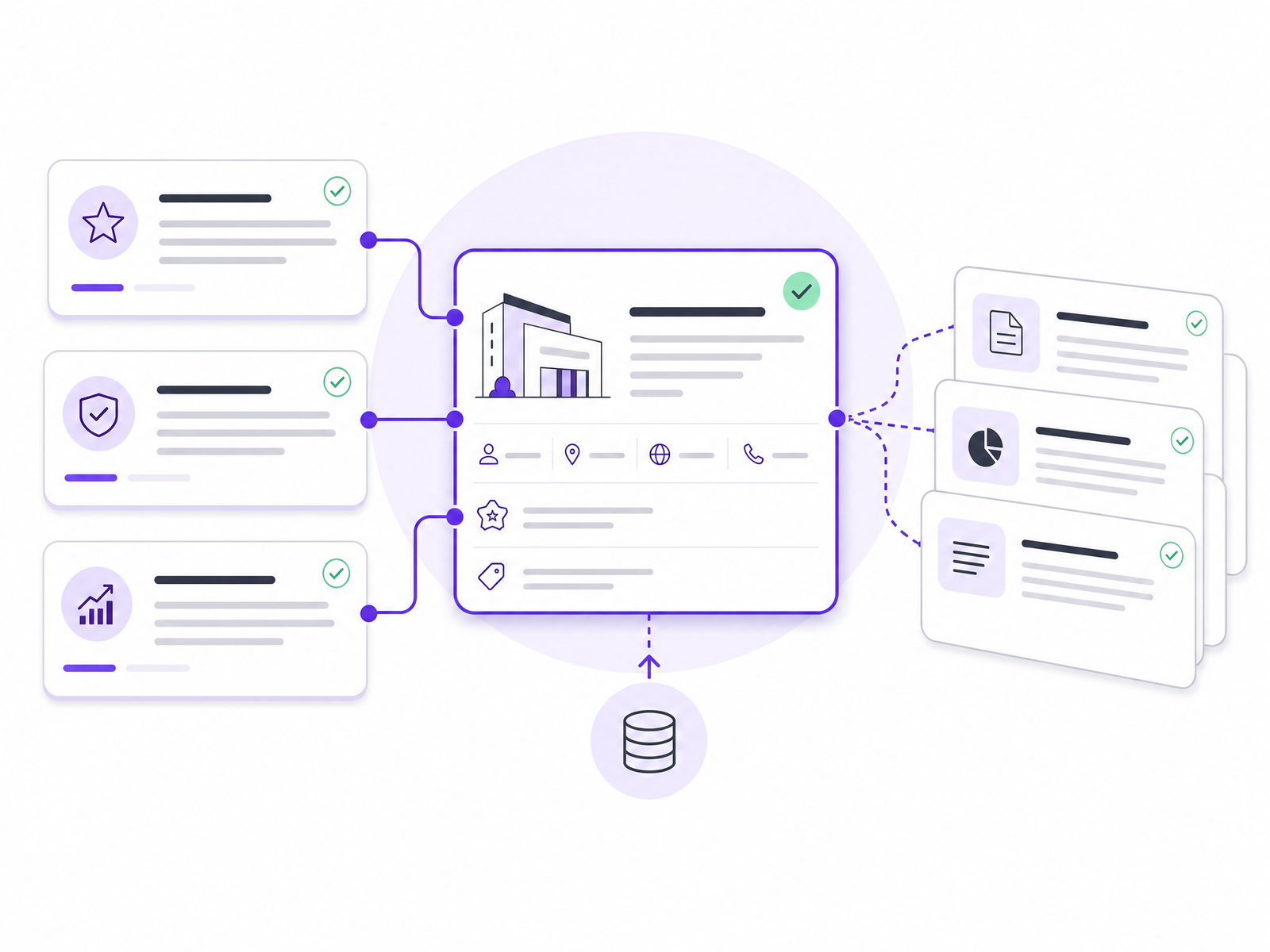
What brand visibility in AI search actually means
Traditional search visibility is often discussed in terms of rankings for a keyword. AI search is more varied. A business may be mentioned in an answer, recommended as one of several options, described inaccurately, cited through a page on its own website, or supported by a third-party source. These outcomes are related, but they are not identical.
A useful working model is to separate AI brand visibility into five questions:
| Visibility question | What it measures | Why it matters |
|---|---|---|
| Is the business mentioned? | Whether the system recognizes the brand in a relevant query | A business cannot be considered if it is absent from the answer set. |
| Is it recommended? | Whether the system presents it as a suitable choice | A mention without recommendation may not create demand. |
| Is it described accurately? | Whether category, audience, location, and services are correct | Inaccurate descriptions weaken trust and lead quality. |
| Is it supported by sources? | Whether the answer cites the business or corroborating sources | Source support helps users investigate the recommendation. |
| Does it create action? | Whether visibility leads to qualified visits, inquiries, or bookings | Visibility is valuable when it contributes to a business outcome. |
This distinction prevents a common mistake: treating a single mention as proof that a brand has achieved stable visibility. AI responses can vary with the wording of the prompt, the date, the user’s location, the available sources, and the system’s own retrieval process. A serious measurement program records patterns over time rather than celebrating one favorable answer.
The five signals that determine whether AI can recommend a business
1. Entity clarity: can the system describe what you are?
AI systems need a coherent picture of a business before they can recommend it. That picture includes the company name, category, services, audience, geography, areas of expertise, and meaningful differentiators. If the homepage says one thing, service pages use a different category, social profiles use another description, and external directories contain outdated information, the business becomes harder to characterize with confidence.
Entity clarity is not the same as repeating the company name. It means using consistent, plain-language relationships throughout the site. A visitor should be able to answer these questions quickly:
- What does the company do?
- Who is it for?
- Which problem does it solve?
- What services are available?
- What is the appropriate first step?
Your answers should connect consistently across every page. If you sell several related things, each one needs a name you use everywhere, and a page that owns it. The exact terms matter because they reflect real buyer language, but clarity matters more than inserting every variation into every paragraph.
2. Source corroboration: does the wider web confirm the story?
A company’s website is essential, but it is not the only source an AI system may use to understand the business. Search systems can encounter business profiles, industry directories, interviews, professional bios, articles, reviews, and other public references. These sources do not all carry the same weight, and more mentions are not automatically better.
The objective is consistent, trustworthy corroboration, not a campaign to manufacture mentions. The name, category, services, and core description should be accurate wherever the business is represented. Outdated profiles, inconsistent names, vague service descriptions, and unsupported claims create ambiguity.
This is where a practitioner’s review is more useful than a generic checklist. Foundier compares a business’s own claims with the way relevant external sources describe it, identifies contradictions, and prioritizes the sources that are genuinely relevant to the category. The goal is not to create artificial popularity. It is to make the real business easier to verify.
3. Technical accessibility: can search systems reach and process the important pages?
A strong strategy cannot help if the pages containing the evidence are blocked, unlinked, unstable, or difficult to process. Google’s Search Essentials emphasize technical eligibility, crawlable links, helpful content, and clear site structure. Google’s guidance for AI features likewise says that the same foundational SEO practices remain relevant: important content should be available in text, pages should be crawlable, internal links should help discovery, and structured data should match visible content.
The practical priorities are straightforward:
- Keep the important service and evidence pages indexable unless there is a deliberate reason not to index them.
- Use normal HTML links with descriptive anchor text so crawlers can discover related pages.
- Make the main content available as text rather than hiding essential information behind inaccessible interactions.
- Maintain fast, usable mobile pages and a stable page experience.
- Keep canonicals, redirects, sitemap entries, and metadata consistent.
- Ensure that the public site and CDN do not unintentionally block relevant search crawlers.
There is no special “AI ranking” tag that substitutes for these fundamentals. Google explicitly states that there are no additional technical requirements for AI Overviews or AI Mode and no special schema required for inclusion.
For ChatGPT Search specifically, OpenAI states that OAI-SearchBot is used to surface websites in ChatGPT search features and recommends allowing it in robots.txt and allowing requests from its published IP ranges. This is a crawl-access decision, not a guarantee of placement. Verifying that access is routine technical maintenance, and no one should sell crawl permission to you as a ranking promise.
4. Content extractability: can the answer be found and understood?
AI systems often need to retrieve a specific passage that supports an answer. That does not mean every article must be broken into artificial fragments or reduced to one-sentence paragraphs. It means the page should answer important questions clearly, use descriptive headings, define concepts, and place evidence near the claim it supports.
The most useful content in this category has a clear point of view. It explains what the business owner should pay attention to, what inexperienced teams commonly miss, and where a tool or superficial tactic is insufficient. For example, an article about checking ChatGPT visibility should not stop at “search your company name.” It should explain why prompt variation, competitor comparison, date tracking, description accuracy, and source citations change the interpretation of the result.
Google’s people-first content guidance emphasizes original analysis, substantial value beyond existing pages, visible expertise, and a clear explanation of who created the content and how it was produced. The differentiator worth building is practitioner reasoning: what you inspect, how you interpret a visibility gap, and why one fix is chosen over another.
5. Measurement: can you tell whether visibility is improving?
Visibility should be measured as a pattern, not as a screenshot. A single favorable answer proves very little, because AI responses shift with prompt wording, date, location, and the sources available at the time of retrieval. What is meaningful is the rate at which a business is named across a fixed question set, tested repeatedly.
A useful measurement record includes:
| Measurement | Suggested record |
|---|---|
| Prompt set | The exact buyer questions tested, including category, service, and comparison queries |
| Systems | ChatGPT, Google AI experiences, Perplexity, Claude, or the systems relevant to the audience |
| Date and location | When and where the test was run, because responses can change |
| Brand outcome | Not mentioned, mentioned, recommended, or inaccurately described |
| Competitor outcome | Which alternatives appeared and how they were positioned |
| Source outcome | Whether the response cited the business or another corroborating source |
| Business outcome | Organic visits, engaged sessions, audit clicks, inquiries, and qualified bookings |
A dashboard can help collect and compare these observations. It cannot, by itself, explain why a competitor is being recommended or implement the fix. That is the difference between monitoring and optimization.
What strategies improve brand visibility in AI search engines?
The highest-leverage strategies are the ones that improve the underlying information available to both people and search systems.
Make the business category unmistakable
Use a clear homepage statement, consistent service names, descriptive page titles, and a service architecture that reflects how buyers think. Avoid making one page target every variation of AI SEO, AI visibility, GEO, AEO, and search optimization. Assign each important concept to the page that can explain and support it best.
Your homepage should communicate the company-level category, and your services hub should explain what you actually deliver and how an engagement starts. Specialist pages can then address narrower terms without competing with the homepage for the same intent. Splitting one intent across four near-identical URLs is one of the most common self-inflicted visibility problems.
Build pages around decisions, not just definitions
A page is more useful when it helps a reader decide what to do next. An article about visibility should answer questions such as: Is this a technical problem, an entity problem, a content problem, a source-corroboration problem, or a measurement problem? What evidence would distinguish one from another? When is a tool enough, and when is implementation required?
This decision-oriented structure also creates a natural conversion path. A reader who recognizes a measurement gap can read the KPI guide. A reader who discovers technical ambiguity can review the Technical SEO + Schema service. A business owner who wants the full diagnosis can book the AI Visibility Audit.
Improve the pages that deserve to be cited
Do not assume that publishing more articles is the fastest route to visibility. Review the pages that already contain the strongest evidence about the business: service descriptions, methodology pages, case evidence where it genuinely exists, founder information, pricing, FAQs, and original research. Make those pages easy to find and internally link to them from relevant articles.
Google recommends making links crawlable and using descriptive anchor text so people and crawlers understand the destination. A sentence such as “see Foundier’s AI Visibility Audit methodology” gives more context than a generic “learn more” link.
Earn accurate corroboration, not artificial mentions
Relevant third-party references can help people verify a business, but indiscriminate directory submissions and manufactured mentions are not a durable strategy. Pursue references that make sense for the business: genuine partnerships, expert contributions, industry profiles, useful original research, and accurate professional listings.
The test is simple: would the reference still be worth having if it produced no ranking benefit? If the answer is no, it is probably not a trust signal worth chasing.
Turn visibility data into implementation priorities
A good audit should not produce a wall of scores. It should explain what the business is being understood as, where the description breaks down, which competitors are better represented, and which actions have the strongest relationship to the observed gap.
Foundier’s role is to convert that diagnosis into work: technical and schema improvements, entity consistency, content restructuring, source-corroboration priorities, and ongoing monitoring where the business needs it. The buyer should leave knowing not only that visibility is weak, but what should happen next and why.
Why a quick ChatGPT check is not a complete visibility audit
A quick check can be useful as a first signal. A business owner can ask several realistic buyer questions and note whether the company appears. But a one-off test has serious limitations:
- Prompt wording changes the result. “Best AI SEO agency” and “who can fix my technical schema for AI search?” may produce different answers.
- Systems retrieve different sources. One search experience may cite the company website while another relies on a directory, article, or other source.
- The result can be unstable. Responses may change as sources are updated, indexes refresh, or the system receives a different context.
- Mention is not recommendation. A brand can appear in a list without being positioned as a strong fit.
- A check does not diagnose the cause. It shows an outcome, not whether the cause is technical, entity, content, or corroboration-related.
A real audit adds structured sampling, competitor comparison, source review, technical inspection, content analysis, and a prioritized action plan. That is why Foundier’s audit is the correct first step for a business that wants to improve visibility rather than merely take another screenshot.
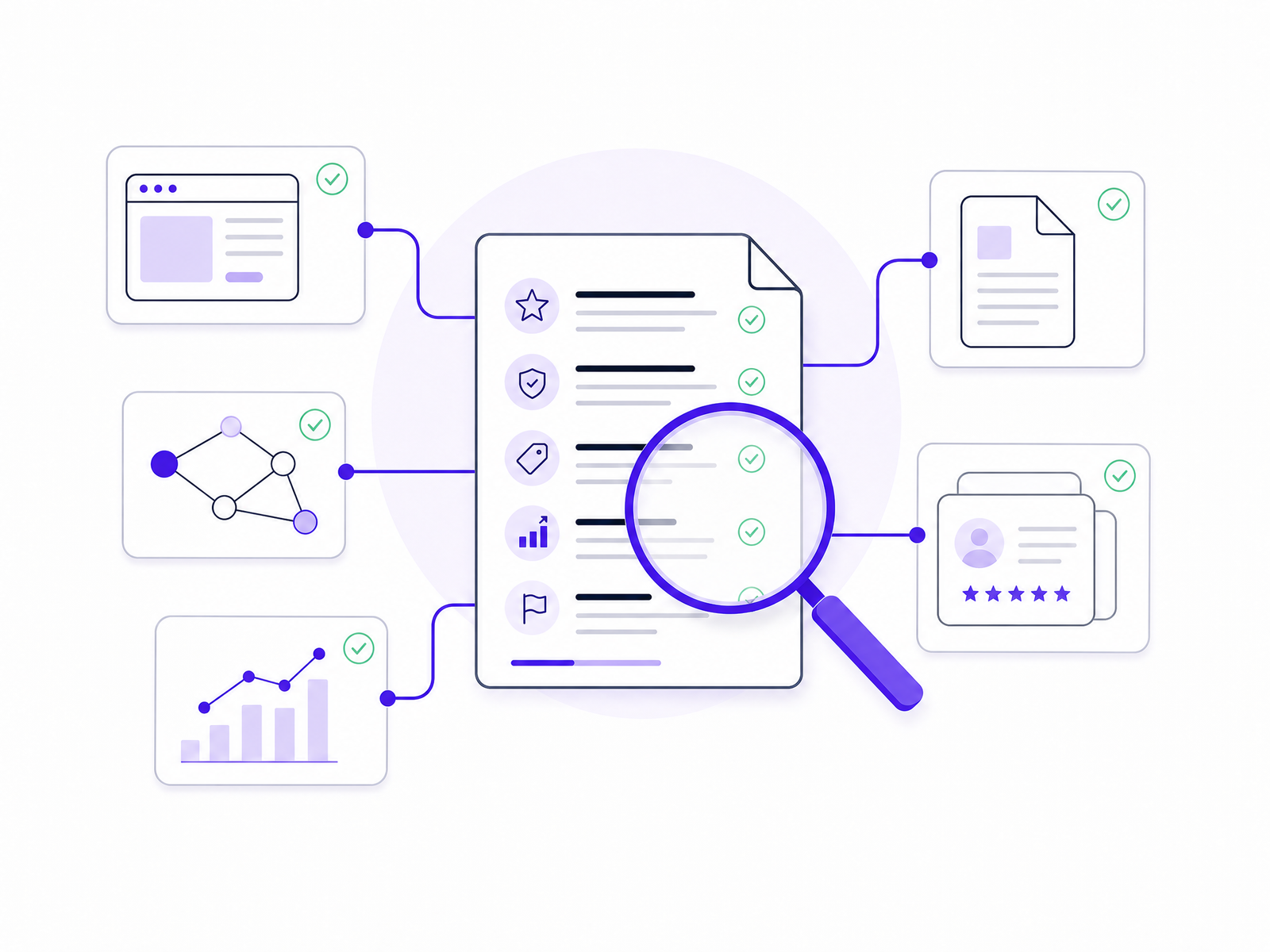
How Foundier turns visibility problems into implementation work
Foundier is not a software dashboard presented as an agency. The company’s role is to diagnose and implement the work that makes an established business easier for AI search systems to understand, trust, and cite.
The process follows five connected stages:
| Stage | What Foundier does | What the client receives |
|---|---|---|
| Audit | Tests visibility across relevant AI systems, reviews competitors, and inspects technical and source signals | A diagnosis of where the business stands and what is blocking visibility |
| Prioritize | Separates high-impact gaps from low-value noise and maps the correct service path | A sequenced action plan rather than a generic checklist |
| Build | Implements the appropriate technical, entity, schema, content, and corroboration work | Stronger, clearer evidence across the site and relevant public sources |
| Verify | Re-tests representative queries and checks whether the business is understood more accurately | A record of changes and remaining gaps |
| Monitor | Tracks citation movement, competitor share, description accuracy, and business outcomes | Ongoing visibility intelligence when a continuing program is justified |
The first step is the AI Visibility Audit. Foundier’s public offer is a five-day diagnostic that combines AI visibility checking, technical and schema review, and competitor citation analysis. The audit is credited toward subsequent work, so the diagnosis determines whether the business needs AI SEO services, technical work, content work, ongoing monitoring, or no immediate engagement at all.
That audit-first model matters because not every business needs every service. A company with strong technical foundations but weak category clarity has a different problem from a company whose content is clear but whose public sources are inconsistent. Treating every situation as the same “AI SEO package” wastes money and makes the strategy less credible.
Common mistakes that limit AI brand visibility
Chasing mentions instead of clarity
A high count of untrusted mentions does not make a business easier to recommend. Consistency and relevance are more valuable than volume.
Treating AI visibility as a software score
A score can help organize observations, but it is not the diagnosis. The important question is what the score reveals about the business’s technical, entity, content, and source signals.
Publishing dozens of near-duplicate pages
Changing a few words between “AI SEO agency,” “AI SEO company,” and “AI search optimization agency” does not create useful topical authority. Each page should have a distinct purpose, audience, and evidence base. Google’s guidance warns against producing content primarily to manipulate search visibility or covering variations without adding value.
Hiding the important answer behind interactions
If the most important service explanation, methodology, or evidence is visible only after a difficult interaction, it is less useful to people and harder for crawlers to process. Keep essential information in readable page content.
Making deterministic promises
No credible provider can guarantee that a particular AI engine will always name a business or place it first. The responsible promise is better diagnosis, better evidence, clearer implementation, and disciplined measurement.
Related guides: What is AEO? Answer engine optimization explained · Law firm SEO for Google and AI answers
Frequently asked questions
How do I improve my brand visibility in AI search engines?
Start by making the business easy to understand and verify. Align the company category, services, audience, and differentiators across the website and relevant public sources. Then improve technical accessibility, create useful answer-focused content, and measure brand mentions, recommendations, descriptions, citations, competitor share, and business outcomes over time. A structured audit is more reliable than a single prompt test because it helps identify the cause of the visibility gap.
What are the best ways to improve brand visibility in AI search results?
In rough order of leverage: fix entity clarity first, so the category, services, and description match everywhere the business appears. Second, make sure the pages holding your strongest evidence are crawlable and internally linked. Third, restructure those pages so the answer sits near the top rather than at the end. Fourth, correct inconsistent third-party profiles. Publishing additional articles is usually the lowest-leverage option, and it is the one most businesses reach for first.
How do you improve AI presence for a brand?
Treat presence as the product of two things an AI system needs: a clear model of what the business is, and retrievable evidence that supports it. A brand with a clear model but no retrievable evidence gets described vaguely. A brand with plenty of content but an unclear model gets described as something it is not. Diagnose which side is weak before deciding what to build.
How can I increase visibility in ChatGPT searches?
Confirm that OAI-SearchBot can reach your site, then focus on the pages that answer real buyer questions directly. ChatGPT search retrieves passages, so a page that states its answer plainly near the top is more usable than one that builds to a conclusion. Consistent third-party descriptions matter too, because the model may draw on sources other than your own site when deciding how to describe you.
How can I check my brand visibility in ChatGPT?
Use a small set of realistic buyer questions rather than searching only for the company name. Record the exact prompt, date, location, answer, competitors mentioned, description accuracy, and sources cited. Repeat the test across multiple prompts and dates. Treat the result as directional, not as a fixed ranking position. A professional AI Visibility Audit adds broader system coverage, competitor analysis, technical review, and an implementation plan.
What are the best ways to track brand mentions in AI search?
Track a consistent prompt set across the AI systems relevant to your customers. Record whether the brand is mentioned, recommended, accurately described, and supported by a citation; then connect those observations to organic visits, inquiries, audit clicks, and qualified bookings. Tools can make collection easier, but they do not replace interpretation or implementation. The guide to tracking AI brand mentions covers the method in detail.
Does structured data guarantee AI search visibility?
No. Structured data can help search systems understand eligible content when it accurately reflects visible page information, but it does not guarantee inclusion, recommendation, or citation. Google states that there is no special schema required for AI Overviews or AI Mode. Structured data should be part of a broader technical and content strategy.
Should I hire an AI SEO agency or use an AI visibility tool?
A tool is useful when you need repeated measurement and your team already knows how to interpret and act on the findings. An agency is appropriate when the business needs diagnosis and implementation across technical SEO, entity clarity, content, schema, source corroboration, or ongoing strategy. Many businesses use both, but the correct sequence is to understand the problem before selecting the delivery model.
Conclusion: visibility is the result of being understandable and defensible
Improving brand visibility in AI search engines is not about forcing a brand into an answer or publishing a large volume of generic AI content. It is about building a business presence that can be understood consistently, verified through credible sources, retrieved from crawlable pages, and supported by clear answers to real buyer questions.
Most businesses arrive at this problem with the same question: whether AI search is quietly routing their customers elsewhere, and if so, what specifically to change. That question deserves a diagnosis rather than another vague promise, because the answer differs from one business to the next.
Foundier provides that path. The AI Visibility Audit shows where the business stands, who competitors are being recommended instead, and which technical, entity, content, and citation improvements should come first. From there, Foundier implements the work through the service path the evidence supports.
If your business is real, your expertise is established, and AI search is still not reflecting it, start with the diagnosis—not another guess.

Ahmad is the Founder of Foundier, an AI SEO agency that gets businesses recommended by ChatGPT, Perplexity, Claude, and Google AI Overviews. His focus is simple: when your buyers ask AI who to hire, your name should be the answer, not a competitor's.